Compliance Intelligence

Compliance Intelligence for connected and safety- critical products

Tools and consulting for the central standards of modern product development — ISO/SAE 21434, EU Cyber Resilience Act, IEC 62443, ISO 26262, IEC 61508, Automotive SPICE and requirements traceability.
With itemis SECURE as the tool for cybersecurity engineering and itemis ANALYZE as the hub for end-to-end requirements traceability.

Trusted by
Atruvia avitea Bauerhin BLG BSH DB Denso Draeger ETAS Forvia-Hella Kostal magnotherm MAN ODAS parcIT Pixelboxx Remondis TECE Thalia zurich
Overview

Multiple Compliance Requirements. One Goal.

Compliance requirements do not stop at discipline boundaries. Safety-Engineering and Security-Engineering share the same system boundary. The Cyber Resilience Act sets new deadlines across the entire product supply chain. Requirements traceability is the shared prerequisite for all three — not an optional add-on.

itemis bundles tools and consulting for exactly this overlap: itemis SECURE for cybersecurity engineering to ISO 21434, IEC 62443 and CRA, itemis ANALYZE for end-to-end traceability — enabling our clients to reliably achieve their compliance goal.

Topics in detail

What you’ll find on each page

01

EU Cyber Resilience Act

The EU Cyber Resilience Act sets binding cybersecurity minimum requirements for all products with digital elements on the EU market, with full applicability from December 2027 and reporting obligations for actively exploited vulnerabilities from September 2026. It applies to manufacturers, importers and distributors, and requires Security by Design, lifecycle responsibility and conformity assessment.

This page explains who is affected and when, what the CRA concretely demands, how the compliance roadmap to 2027 is structured, and how itemis SECURE and the CRAIG community accelerate implementation: from risk assessment to CE marking.

Learn more
02

Cyber Security: Industrial & Automotive

ISO/SAE 21434 governs cybersecurity engineering across the automotive product lifecycle and is binding for type approval via UNECE R155. IEC 62443 is the counterpart for industrial automation and OT environments. Both standards are risk-based, lifecycle-oriented and share TARA as the central analytical method.

This page explains what ISO 21434 and IEC 62443 require in practice, how the two standards interlock, and how itemis SECURE enables model-based, agentic TARA execution, serving both regulatory frameworks from a single model.

Learn more
03

Functional Safety

IEC 61508 is the cross-industry parent standard for functional safety of electrical, electronic and programmable systems. ISO 26262 is its automotive derivative, with ASIL classification instead of SIL, but the same methodological core. Both standards require structured hazard analysis, lifecycle-spanning evidence chains and model-based safety documentation.

This page covers the fundamentals of both standards, the overlap between safety and security, tool qualification, the role of agentic AI in the safety lifecycle, and answers the most frequently asked questions on ISO 26262 and IEC 61508.

Learn more
04

Requirements Traceability

Requirements traceability creates the digital compliance backbone of modern development: a continuous chain from requirements through architecture, implementation and tests to validation and release. Standards such as ISO 26262, IEC 61508, ISO/SAE 21434, IEC 62443 and the Cyber Resilience Act all demand traceable evidence across existing tool landscapes.

This page covers the fundamentals and measurable return of traceability, practical case studies from automotive and defence, when traceability does not make sense, and how itemis accompanies the introduction: from maturity assessment to productive tool integration.

Learn more
Our Experts
Dirk Leopold

Executive Vice President Digital Engineering · itemis AG

Dirk Leopold bridges complex engineering requirements and cybersecurity standards in the automotive and IoT domains. As a driving force behind itemis SECURE, he has deep expertise in Threat Analysis and Risk Assessment (TARA) and “Security by Design” methodologies. As a speaker, he focuses on how standards like ISO/SAE 21434 and the Cyber Resilience Act (CRA) impact the future of connected products. He is co-founder and president of CRAIG, an online community supporting the introduction of the CRA across Europe.
Dr. Alexander Nyßen

Executive Vice President Digital Engineering · itemis AG

Dr. Alexander Nyßen has specialised in Model-Based Systems Engineering (MBSE), model-based development and the integration of engineering tools since 2003. He supports companies in successfully introducing and sustainably establishing model-based methods and tool landscapes for the development of complex cyber-physical systems. In strategic product management, he is responsible for itemis ANALYZE and itemis SECURE, with a focus on requirements traceability, functional safety and cybersecurity.

A concrete project in mind? Let’s talk.

Schedule a call with Dirk Leopold and Dr. Alexander Nyßen.

the cybersecurity engineering tool

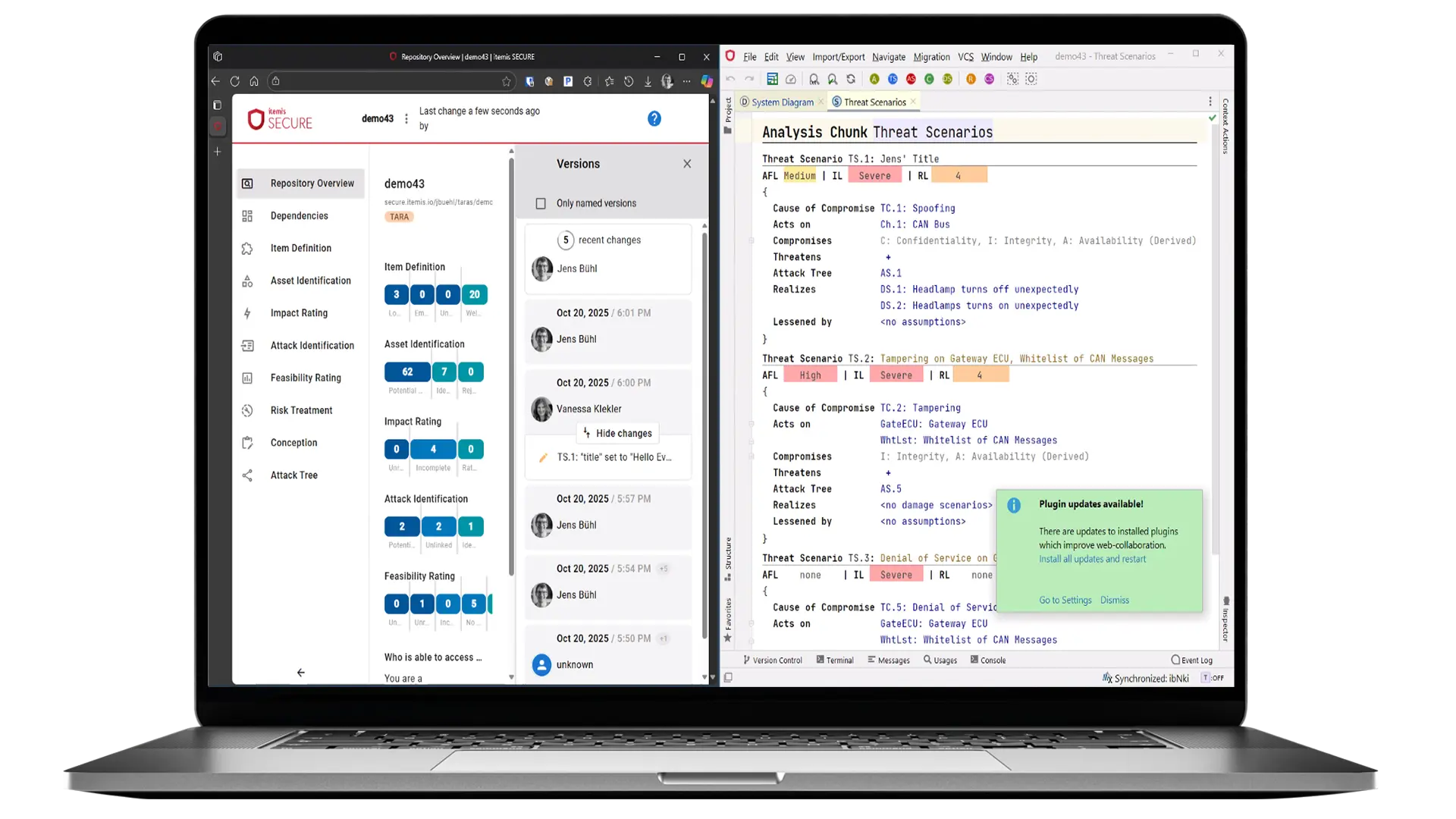
TARA, threat modelling, attack trees, vulnerability management — with native support for ISO/SAE 21434 and the EU Cyber Resilience Act. AI-assisted automation reduces TARA effort by up to 80% with full human-in-the-loop control. In production use — among others — at OEMs, Tier-1 suppliers and medical device manufacturers.
Learn more about itemis SECURE
itemis SECURE Screenshot
Four promises

What sets us apart

Clients want more than competitive rates. They want a partner who stays calm under pressure and is honest when something is not feasible.
Proven team, motivated engineers

Proven team, motivated engineers

We staff projects with people who have already worked together — and with engineers who are motivated because we take them seriously as professionals. More than 80% of our engineers have been with itemis for over three years.

Reliable when it counts

Reliable when it counts

Audits, release weeks, crisis sprints — we stay calm, roll up our sleeves and put in the extra hours. Dependability that is not written into the contract.

Direct, honest, no politics

Direct, honest, no politics

No diplomatic rounds, no manoeuvring. We say openly when something is not workable. Problems are solved with a call, not a memo. Sparring partner, not supplier.

Performance over sales pressure

Performance over sales pressure

We don't chase you with sales conversations. Instead, we invest in the relationship — sometimes more than the current budget allows. Those who know us know: when it needs to work, they call itemis.

Expertise

Insights from Compliance Intelligence

Compliance Was Never About the Document
Blog Requirements traceability

Compliance Was Never About the Document

AI can now produce TARAs, traceability matrices, and safety cases that are structurally complete and terminologically correct. That surfaces a question worth asking: what, exactly, is being verified? The problem is not AI-generated documentation. It is compliance processes that optimize for artifacts instead of the properties those artifacts were supposed to encode.

Read Article
Florian Antony Florian Antony 6 min read
Success stories

Reference projects

Certifications

Certified in quality and information security.

We don't just help others meet standards — we live them ourselves. itemis operates externally audited management systems for quality and information security. Anyone outsourcing safety-critical engineering and sensitive data works with a verified partner.

ISO 9001:2015

Quality Management

ISO 9001:2015

Internationally recognised standard for quality management and the continuous improvement of processes, products and services.

Valid until 27.04.2027

View certificate
ISO/IEC 27001:2022

Information Security

ISO/IEC 27001:2022

Internationally recognised standard for information security management to protect data, systems and critical business processes.

Valid until 01.09.2026

View certificate
Frequently asked questions

FAQ on Compliance Intelligence

What is the difference between TARA and HARA — and why do both share the same system boundary?

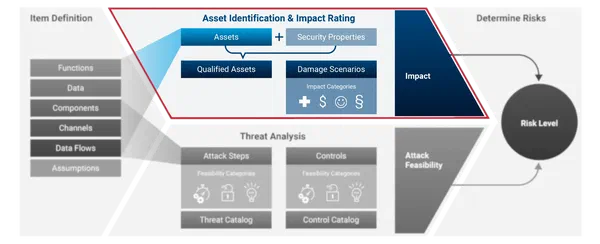
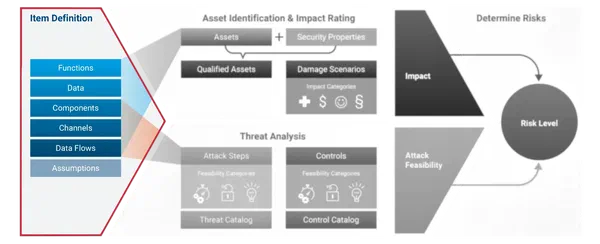
The HARA (Hazard Analysis and Risk Assessment per ISO 26262) assesses how system malfunctions can endanger people. The TARA (Threat Analysis and Risk Assessment per ISO 21434) assesses how attackers can compromise the system. Both analyse the same system — which is why they share the system boundary.

The key difference: safety protects the environment from the system (against unintended malfunctions), security protects the system from the environment (against deliberate attacks). Methodologically, both work risk-based and across the product lifecycle. A shared, model-based system architecture as the foundation for HARA and TARA significantly reduces redundancy — and is the approach itemis applies in projects with parallel safety and security requirements.

Can the same requirements traceability be used simultaneously for ISO 26262, ISO 21434 and ASPICE?

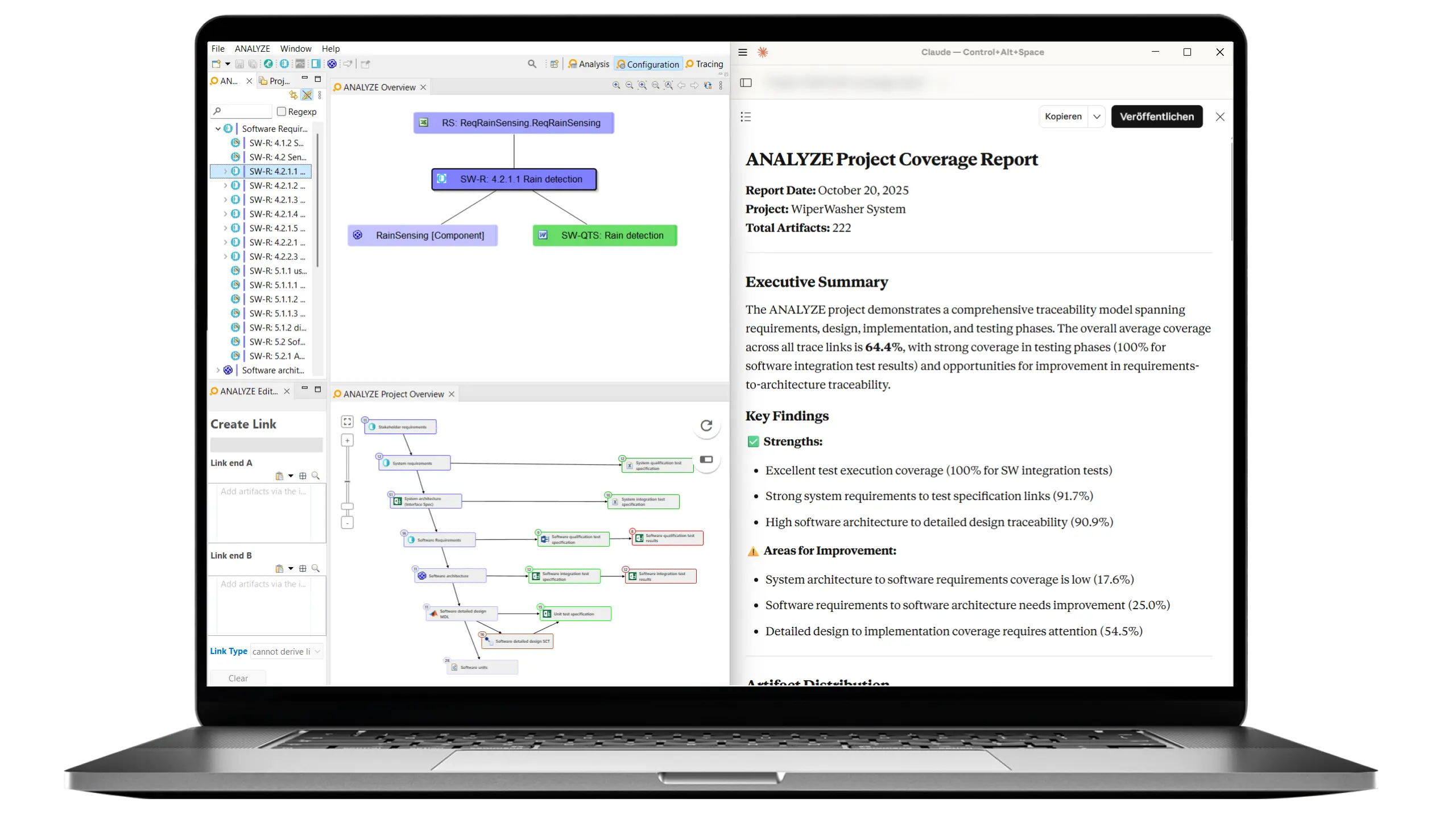
Yes — and it is even methodologically sound and the most efficient implementation. All three require end-to-end traceability from requirements through to verification. itemis ANALYZE implements a tool-agnostic traceability layer across existing tool landscapes — without migrating existing tools.

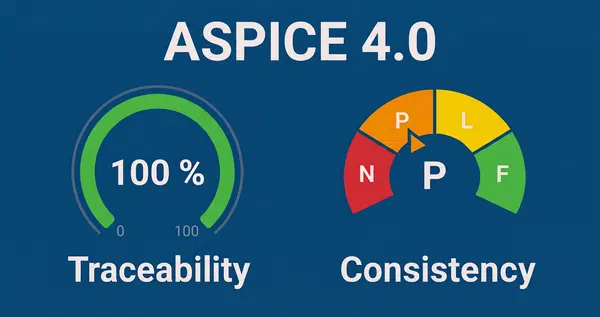
Safety requirements from the HARA, cybersecurity goals from the TARA and system architecture are linked in the same model. Changes propagate automatically; compliance evidence is generated as a by-product of development rather than as a separate documentation task before the audit. ASPICE mandates bidirectional traceability as a baseline practice — a well-implemented traceability system along these lines fulfils ASPICE requirements while simultaneously delivering the evidence chain for ISO 26262 and ISO 21434.

What distinguishes a model-based TARA in itemis SECURE from an Excel-based TARA?

Excel TARAs age quickly: quality varies by contributor, every change requires manual updates across all linked documents, and consistency is structurally unenforceable. With short development cycles or OTA updates, this does not scale.

itemis SECURE makes the TARA model-based: threats, attack paths and measures are bound to a consistent model. AI assistants suggest threats and attack trees context-awaredly — based on the full TARA history and existing system architecture. Changes propagate through the model. According to itemis, agentic automation reduces TARA effort by up to 80% while maintaining full human-in-the-loop control. The result: a living security model rather than a PDF that is outdated three months after the audit.

How do you prepare concretely for the Cyber Resilience Act by 2027?

Two deadlines are critical: From September 2026, vulnerability disclosure obligations apply for actively exploited vulnerabilities — 24-hour early warning, 72-hour full report to ENISA. From December 2027, all CRA requirements apply: security by design, SBOM obligation, lifecycle responsibility and CE marking with cybersecurity evidence.

Recommended sequence: initial check whether the product falls within scope → establish a vulnerability disclosure process → conduct TARA for all CRA-relevant products → build requirements traceability for the evidence trail → conformity assessment and CE marking. The CRAIG community (itemis is a founding member) offers free scope checks, templates and local networks. itemis SECURE covers the technical implementation — from TARA through to lifecycle management.

When does requirements traceability make sense — and when is it too early?

Traceability pays off when multiple disciplines are working on a single system, regulatory pressure exists from standards such as ISO 26262, ISO 21434, CRA or ASPICE, and requirements change dynamically. The ROI calculation tips quickly: ASPICE preparations that previously took weeks can be reduced to hours with end-to-end traceability.

It is too early when foundational processes are not yet defined — traceability then just digitalises existing chaos. Or when management commitment is absent: traceability is a cultural change, not a tool rollout. itemis states this clearly in the first conversation — and recommends where to start when traceability is not yet the right fit.

How do ASPICE, ISO 26262 and ISO 21434 relate to each other — and what connects them?

ASPICE (Automotive SPICE) is a process maturity model — it evaluates how well development processes are organised, not what is being built. ISO 26262 is a product-related safety standard for electrical and electronic systems in vehicles. ISO 21434 is the corresponding cybersecurity standard.

The connection: ASPICE mandates bidirectional traceability as a baseline practice for all engineering processes. This is the same foundation that ISO 26262 requires for the safety evidence chain and ISO 21434 for the security evidence chain. Implementing traceability properly once fulfils the process requirements of all three frameworks simultaneously — instead of maintaining three separate compliance worlds.