


















Custom Software Development

Custom Software Development for Enterprise

Tailored software development for enterprise customers — full-stack, AI-assisted and agile. For CTOs, IT directors and enterprise architects in banking, insurance, logistics, energy, public sector and industry.

Trusted by
Atruvia avitea Bauerhin BLG BSH DB Denso Draeger ETAS Forvia-Hella Kostal magnotherm MAN ODAS parcIT Pixelboxx Remondis TECE Thalia zurich
Overview

Engineering expertise that thinks beyond the individual project.

Custom software development is more than delivering features. It requires the interplay of a well-considered engineering strategy, the right integration of AI and the ability to modernise legacy systems step by step — without putting ongoing operations at risk.

itemis combines three disciplines for exactly this: AI Enablement for the sustainable use of AI in development and organisation, Legacy Modernization for the methodical, incremental migration of legacy systems with provable equivalence, Full-Stack & Cloud for cloud-native platforms in regulated industries. Senior teams with a strong open-source tradition — and the conviction that quality is non-negotiable.

Topics in detail

What each page covers

01

AI Enablement

AI in the development process is more than a Copilot subscription. Sustainable adoption means: analysing processes, selecting the right tools, ensuring data sovereignty, and involving the people in the organisation from day one.

Here you will learn how AI Enablement differs from coaching and tool sales, why data sovereignty does not have to be a blocking issue, what the path from a first pilot to independent operation looks like, and when we advise against AI.

Learn more
02

Legacy Code Modernization

Legacy code gets more expensive every year, and simultaneously harder to modernise, because the know-how leaves the company along with the developers. The way forward is a methodical, incremental approach.

Here you will learn why the strangler-fig pattern is structurally superior to big-bang rewrites, how the five-stage model guarantees safety at every level, what role AI-assisted analysis toolchains play, and what a concrete project blueprint looks like.

Learn more
03

Full-Stack Development & Cloud Migration

Full-stack means: frontend, backend, API design, data modelling, deployment, observability. A coherent engineering discipline, not a collection of sub-contractors. For regulated industries, sovereign cloud and compliance requirements are part of the equation.

Here you will learn how senior teams deploy AI toolchains productively through advanced context engineering, which enterprise stack we use, what sovereign cloud and Gaia-X-compliant architectures mean for regulated industries, and what a structured project onboarding looks like.

Learn more
Our Experts
Holger Schill

Executive Vice President Cloud & Enterprise · itemis AG

Holger Schill is Executive Vice President Cloud & Enterprise at itemis. Since 2008, he has shaped the domain for modern cloud solutions, automation and AI agents, successfully delivering dozens of client projects. The author of numerous publications shares his expertise through training sessions, as a speaker at international conferences, and as a long-standing committer on the open-source project Eclipse Xtext. He is currently focused on the strategic simplification of complex systems.
Christoph Hess

Head of Artificial Intelligence · itemis AG

Christoph Hess is Head of Artificial Intelligence at itemis and has been specialising since 2021 in the technological evolution from classical machine learning algorithms to the integration of autonomous AI agents into complex enterprise environments. He analyses how organisations can deploy AI strategically and writes about autonomous agent systems, AI architectures and the practical integration of AI into enterprise processes.

A concrete project in mind? Let’s talk.

Schedule a call with Holger Schill and Christoph Hess.

Four promises

What sets us apart

Clients expect more than competitive rates. They want a partner who stays calm under pressure and acts pragmatically when it matters.
Cohesive and motivated

Cohesive and motivated

We staff projects with cohesive teams and engineers who are motivated because we take them seriously. Clients notice the difference from the very first sprint.

Resilient under pressure

Resilient under pressure

Audits, release weeks, crisis sprints — we stay calm, maintain focus and deliver under pressure every time. Reliability that goes beyond the contract.

Direct and at eye level

Direct and at eye level

No diplomatic detours, no politics. We communicate directly, listen carefully and speak plainly when something isn't right. A sparring partner, not a supplier.

Performance over sales pressure

Performance over sales pressure

We invest in the partnership, not the sales pitch. Those who know us know: at itemis, reliability is not something we promise — it is something we demonstrate.

Expertise

Insights from Custom Software Development

Horizontal Skills and Vertical Agents
Blog Ai enablement

Horizontal Skills and Vertical Agents

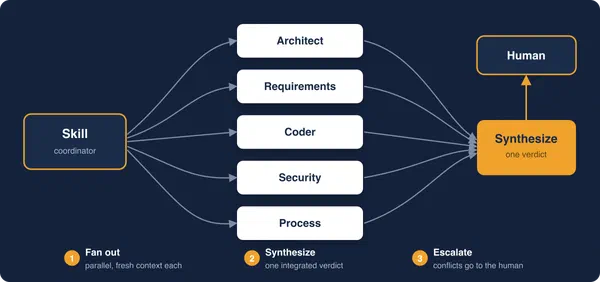
How to hand the bulk of software development to AI agents – and still get a result you can trust. A practitioner's look at vertical agents and horizontal skills for enterprise software teams.

Read Article
Arne Deutsch Arne Deutsch 8 min read
What to Do After Camunda 7 CE End-of-Life?
Blog Full stack

What to Do After Camunda 7 CE End-of-Life?

Camunda 7 CE is reaching end-of-life. Operaton and the OpenBPM Platform offer a powerful open alternative – with minimal migration effort and maximum future-proofing.

Read Article
Karsten Thoms Karsten Thoms 2 min read
Success stories

Reference projects

Frequently asked questions

FAQ on Custom Software Development

When does custom software pay off — and when is a standard product the better choice?

Custom software pays off when core processes are too specific for a standard product, when competitive advantages lie in proprietary logic, or when integration requirements exceed what a standard product can handle. Standard products are the better choice for peripheral processes with no differentiation requirements.

The deciding factor is not cost but the strategic significance of the software to the business model. Custom development is an investment in core competency — not a substitute for missing process discipline.

What role does AI play in modern software development — and where does human expertise remain indispensable?

AI accelerates standardisable tasks: code reviews, test generation, documentation, routine refactorings. What AI structurally cannot do: make architecture decisions with long-term consequences, translate domain knowledge into data models, or meaningfully interpret requirements in regulated environments.

The most valuable use of AI in software development is not replacing engineers but taking over routine work — so more capacity remains for decisions where context and judgement matter.

How does legacy modernisation work without a big-bang migration?

Big-bang migrations frequently fail because complexity is underestimated and operations cannot be interrupted. The more reliable approach is incremental migration following the Strangler Fig pattern: new functionality is built alongside the legacy system, existing modules are replaced step by step until the legacy system is fully retired.

The prerequisite is a stable interface design between old and new, with clear migration paths for business processes and data — and defined intermediate states that remain usable in production.

What distinguishes sustainable software engineering from fast feature delivery?

Fast feature delivery maximises short-term deliverable functionality — often at the expense of architecture quality, test coverage and maintainability. That creates technical debt which shows up as rising change costs, fragile releases and hard-to-predict future development.

Sustainable engineering makes deliberate decisions that are difficult to undo later: database design, API interface stability, deployment architecture, test strategy. This does not mean slower delivery — it means delivery speed that does not come at the cost of the next three years.