AI Enablement

AI That Actually Works in Your Organisation.

Done right, AI delivers real productivity gains: tasks that take hours today take minutes. The right tools, clean integration into existing processes, and actively making the people in your organisation co-designers make the difference. We bring the AI to your data.

The Typical Starting Point

Why AI Initiatives Fail

Proof-of-Concept Graveyards

A tool is licensed, a pilot kicked off, and a few weeks later the whole thing stalls. Nobody understood the underlying processes, the data did not fit, and the result ends up in a drawer.

Data Protection as a Showstopper

The pilot runs on test data, and then it is time to work with real personal data. Suddenly it no longer works. Many providers deliver only a fragment and leave sovereign hosting to the customer.

People Are Left Out

AI introduced over the heads of employees fails at the acceptance stage. Efficiency on paper, friction in practice, because nobody involved the people.

Our Approach

What Is AI Enablement?

AI Enablement means enabling an organisation to use AI independently and sustainably, as a permanent part of the way it works rather than in isolated instances. The term deliberately distances itself from two common misconceptions: it is neither a one-off coaching nor the pure sale of an AI licence.

The difference lies in the depth and in the duration. Coaching explains how a tool works and leaves the implementation to the customer. A tool sale delivers a licence and ends at the first real data-protection or integration problem. AI Enablement covers both, and goes beyond: we analyse the processes, actively shape the workflows, integrate the solution into the existing system landscape and accompany the customer until AI is strategically embedded in their business. In today’s fast-moving environment we monitor the market, keep toolchains and models up to date, and benchmark models against the customer’s use cases to optimise cost and benefit.

The decisive shift is in the role we take on. In the classic project world, users found someone to implement a defined system. In AI Enablement, we work with the customer to determine which system they actually need.

And it is not limited to software companies. The areas where AI delivers impact are the same ones in which we already work internally, and they often have nothing to do with software development: administration, analytics, support, controlling, triage in production. We sit down with the doctors, the architects or the specialist managers, analyse how they work, and automate with them the steps where AI creates real value.

We do not see ourselves as a coach who converts a manual workflow into an automated one once and then disappears, but as a partner for your long-term AI strategy.

AI in Context

Why Technology Is Only Half the Story

AI is a powerful tool, and anyone who ignores it will be pushed out by the market. But anyone who believes AI is already capable of always making good decisions independently and reliably has fallen for a dangerous hype. To use AI sensibly, it must be embedded in the right context.

Business Processes & Requirements

An AI that does not understand what actually happens in the organisation will, at best, automate the wrong things. AI adoption starts with the process, not the model.

Existing IT Landscape

AI does not emerge on a blank slate. It must fit into grown systems, including security and data-protection requirements.

The People

Most importantly: the employees who are to work with and co-design the new tools. AI introduced over the heads of employees fails at the acceptance stage.
Scope of Services

What AI Enablement Covers: From Analysis to Productive Operation

AI Enablement is not a single product but a coherent bundle of services. The following building blocks interlock; depending on the customer’s maturity, we start at different points.

Process & Use-Case Analysis

We go into the organisation, analyse working practices and jointly identify the use cases with the greatest leverage, and equally those where AI is not worth it.

Tool & Model Selection

We are independent of manufacturers and compare tools against your specific needs: Copilot, Cursor, Claude Code, OpenCode. Which tool for which team? We then build concrete workflows with MCP servers, skills and agents.

Integration into Existing Systems

The AI is connected to your existing systems and embedded in your established processes, as a first-class component of the toolchain.

Data Protection & Sovereignty

Consulting on data protection, design of sovereign hosting solutions and, where needed, training of adapters on open-source models, so you can work with sensitive data too.

Cost Optimisation

AI usage can become expensive. We bring the experience to know when which model is worth it and how to design a toolchain that actually saves money, rather than using AI just for the sake of using AI.

People Enablement

The goal is independence, not dependency. We involve your staff from the start so they can co-design solutions and develop them further over time. The goal: create more value with the same people.
Data Sovereignty

We Bring the AI to Your Data

For many organisations, data protection is the point at which AI initiatives fail. The use case is clear, the pilot runs on test data, and then comes the moment when real personal data is needed, and suddenly it no longer works. This is exactly where many providers deliver only a fragment: they provide the skill and the MCP and leave sovereign hosting to the customer. That helps no one.

Our principle reverses the usual logic: instead of sending your sensitive data to a foreign cloud AI, we bring the AI to where your data lives. In practice, depending on requirements, this means:

  • Operation in the EU, in a sovereign environment, or on your own hardware
  • Connecting models to your systems via MCP without data leaving the building
  • Training adapters on an open-source model that delivers the same quality without exposing your data, for cases where a sovereignly available model alone does not reach the necessary quality
New Possibilities

Software That Adapts to Your People, Not the Other Way Around

Perhaps the greatest benefit of modern AI is rarely stated: software can finally adapt to the needs of its users, rather than users having to adapt to the software. Anyone who buys an off-the-shelf tool (a CRM, a practice management system, any sector solution) has always had to adapt to what was built into the tool. Friction remains, because the user’s reality is more nuanced than any pre-built product.

With AI, this power shifts to the user. Non-technical employees often experience for the first time that they can build a tool that does exactly what they need: a precise solution containing exactly the right information.

An AI at the beginning is like a new employee fresh from university: a good degree, but not yet up to speed. You introduce it to the task, give it the context, and once that level of onboarding is reached, a brief instruction suffices: “Here is a new tender, get going” or “here is a new patient”, and the AI knows the whole process. In the past, the rational decision was almost always to buy a ready-made solution. As the cost of producing software has fallen sharply, the decision is shifting ever more towards building the perfectly fitting software yourself.

Our Process

How itemis Works: From Stocktaking to Independent Operation

Introducing AI is not an unmanageable large-scale project but a structured, transparent process. We accompany you step by step:

1. Readiness and Use-Case Assessment

We jointly analyse your working practices, your system landscape and your data situation, and identify the use cases with the greatest leverage. The result is a clear target picture with measurable criteria, and an honest statement about where AI is worth it and where it is not.

2. Tool, Model and Architecture Tailoring

We select with you the right tools, frameworks and models, design the workflows with MCP, skills and agents, and address data protection, sovereign hosting and cost frameworks early, so that productive operation holds no nasty surprises.

3. Pilot with a Real Result

We implement a selected use case in production, so that something useful is in your hands at the end. Including the safeguards that productive operation requires.

4. Scaling and Roll-out

After the successful pilot, we extend the approach: to further use cases, areas and teams. Skills and workflows are organised (e.g. as plugins, versioned in GitHub or GitLab) so that individual solutions become a sustainable, maintained AI practice.

5. Long-Term Accompaniment and Independence

We remain your partner beyond the pilot, develop solutions further with you, and help your team take increasing ownership. The stated goal: that you use AI independently and productively, with us as a strategic partner in the background.

Clear Boundaries

What AI Enablement Is Not: and When We Advise Against It

Trust also comes from stating what you do not do.

No “sell a licence and run”: Many providers set up a workflow and then disappear. We want to be the ones who support you long-term: developing your processes with you, embedding AI strategically in your business, and not leaving after the first delivered skill.

No one-off coaching: A training that explains and then ends leaves you alone at exactly the moment it gets serious: the step from test data to real data, from demo to operation. We actively co-design and stay until you can continue independently.

No AI theatre: We do not deploy AI just to deploy AI. If a use case brings no real benefit, we say so.

When AI Enablement Is (Not Yet) the Right Lever

AI is not the answer everywhere. There are situations where we advise against it or recommend other groundwork first:

  • When there is no real process to improve. Without a recurring task with a clear pain point, the lever is missing.
  • When the data foundation is absent. If the necessary data is unavailable or of poor quality, data work is the first step, not the model.
  • When the organisation is not yet ready to involve its people. AI introduced against employees fails at the acceptance stage.
  • When a stable standard tool already fits perfectly. A tailored AI solution is then an expensive end in itself.

The efficiency-quality balance applies beyond software development too: trying out AI just because everyone does, and giving up at the first resistance, creates a graveyard of proof-of-concepts, but no value. The oft-cited 10× productivity gains are real, but they only materialise if done right: the right tools, cleanly integrated processes, and employees involved rather than bypassed.

Frequently Asked Questions

Frequently Asked Questions about AI Enablement

What is AI Enablement?
AI Enablement enables an organisation to use AI independently and sustainably: cross-industry and end-to-end. It covers process analysis, tool and model selection, integration, data protection and people enablement. Unlike a one-off coaching or a pure tool sale, it is designed for long-term accompaniment.
How does AI Enablement differ from an AI workshop or a tool licence?
A workshop explains, a licence delivers a tool, both end before it gets serious. AI Enablement actively shapes the workflows, integrates them into your systems, solves the data-protection question and accompanies you to independent operation. We deliver the complete package, not a fragment.
Do we have to send our data to a cloud AI?
No. Our principle is: we bring the AI to your data, not the other way around. Depending on requirements, we run models in the EU or in a sovereign environment, connect them to your systems without data leaving the building, and train adapters where needed so that sovereign models reach the necessary quality.
Which AI tool is right for our team: Copilot, Cursor or Claude Code?
That depends on the team, the tasks and the environment. We do not sell a favourite solution but compare tools against your specific needs and set up the right workflow with MCP, skills and agents, including the question of which model is economical for which task.
Is AI Enablement only for software companies?
No. The greatest levers often lie outside software development: in administration, analytics, support, controlling or production. We work cross-industry, from medical practices to architecture firms to manufacturing SMEs, and work with non-technical users too.
How do we keep AI costs under control?
Through the right model choice per task and a toolchain designed for efficiency. Not every task needs the largest model. We bring the experience to know where savings can be made, especially now that providers are noticeably tightening their token limits.
Our Experts
Holger Schill

Executive Vice President Cloud & Enterprise · itemis AG

Holger Schill is Executive Vice President Cloud & Enterprise at itemis. Since 2008, he has shaped the domain for modern cloud solutions, automation and AI agents, successfully delivering dozens of client projects. The author of numerous publications shares his expertise through training sessions, as a speaker at international conferences, and as a long-standing committer on the open-source project Eclipse Xtext. He is currently focused on the strategic simplification of complex systems.
Christoph Hess

Head of Artificial Intelligence · itemis AG

Christoph Hess is Head of Artificial Intelligence at itemis and has been specialising since 2021 in the technological evolution from classical machine learning algorithms to the integration of autonomous AI agents into complex enterprise environments. He analyses how organisations can deploy AI strategically and writes about autonomous agent systems, AI architectures and the practical integration of AI into enterprise processes.
Get Started

AI Productive, Not Just Trialled

Speak with Christoph Hess and Arne Deutsch about your specific use case. We jointly analyse where AI has the greatest leverage for you, and where it does not. Free of charge and without obligation.

Knowledge

Insights on AI Enablement

Horizontal Skills and Vertical Agents
Blog Ai enablement

Horizontal Skills and Vertical Agents

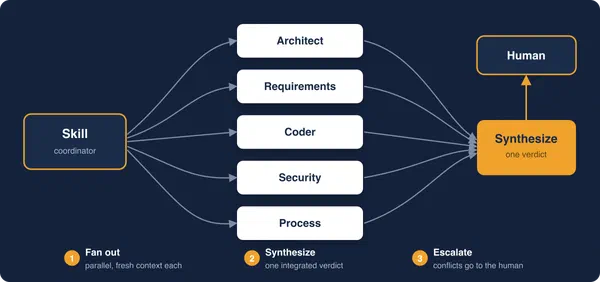
How to hand the bulk of software development to AI agents – and still get a result you can trust. A practitioner's look at vertical agents and horizontal skills for enterprise software teams.

Read Article
Arne Deutsch Arne Deutsch 8 min read