
Whitepapers
Legacy Modernization
KI-gestützte Modernisierung von Legacy-Kernsystemen
Dieses Whitepaper ist in deutscher Sprache verfügbar.
Download Whitepaper
German
Holistic protection and seamless traceability for cybersecurity, functional safety, and the Cyber Resilience Act
Overview

Methodological excellence and tailored tools for model-based system and software engineering.
Overview

Enterprise software from a single source: AI integration, legacy migration and full-stack development — cost-efficiently and sovereignly hosted.
Overview

Legacy systems are a strategic growth inhibitor. When monoliths grown over decades paralyse your release cycles, mainframe operating costs rise and the know-how of your original developers gradually retires with them, regulated industries come under massive innovation pressure. itemis breaks this vicious cycle with a methodical, incremental migration approach, without Big-Bang risk.
Monoliths grown over decades paralyse your release cycles. Every change becomes a risk project. Innovation pressure rises, agility declines.
Mainframe operating costs rise continuously. At the same time, original developers gradually retire, taking undocumented system knowledge with them.
The complete, risky replacement of the system on a single cut-over date often leads to years of standstill. Technical debt and operating costs keep growing unimpeded.
Successful system modernisation is far more than simple replatforming or cosmetic refactoring. It is the controlled extraction and evolution of business-critical domain knowledge. Blindly translating old code one-to-one into a new language merely copies the architectural mistakes of the past into a new ecosystem.
Our modernisation approach rests on two quality commitments: functional correctness (100 % semantic equivalence to the legacy system) and maintainability (generation of modern, idiomatic target code without proprietary dependencies).
We view legacy systems as the valuable, generation-tested foundation of your success. Instead of incalculable all-or-nothing operations, we deliver a methodical, incremental migration approach: through the combination of classical software craftsmanship and AI-assisted analysis and migration toolchains.
Our core promise: we have strong guarantees at every stage that the original functionality is preserved, because a green test suite is present at every point in time. The individual stages build on each other:
Stage 1: Classical, rule-based transpilation: A deterministic transpiler produces a semantically exact 1:1 mapping of the legacy code in the target language. This runnable reference is the safety net, no AI, no hallucination risk.
Stage 2: Test generation & trace recording: Using the runnable reference as a baseline, we record real trace logs and automatically generate a complete test pyramid. These tests approximate a “manifold” around the actual system behaviour and make that behaviour measurable.
Stage 3: Code documentation & reverse engineering: AI-assisted extraction and documentation of system architecture, business logic and dependencies: the knowledge foundation for safe refactoring and subsequent know-how transfer.
Stage 4: Custom tooling & MCP server: Project-specific tools and a context-loaded MCP server give the AI a precise semantic frame that structurally excludes code anomalies.
Stage 5: AI-based Spec-Driven Design refactoring with expert knowledge: Only now do we transform the code into a modern, idiomatic target architecture. Every transformation is validated against the test pyramid and reviewed by senior architects (Human-in-the-Loop).
Because a complete test pyramid enclosing the original behaviour is present at every point in time, we guarantee preservation of the original business logic, while delivering readable, maintainable and modularly structured code.
For comprehensive coverage we combine operational test data from your production environment, hand-written edge-case tests for critical mathematical business logic (e.g. commission and rounding rules) and AI-generated synthetic datasets to simulate extreme load scenarios in advance.
Both the transpiled reference code and the final, AI-optimised Java code are instrumented so that all accesses to external environments (databases, files, interfaces) are logged in detail. An automated behaviour review compares these trace outputs in real time: every deviation is immediately localised.
The bulk of our effort goes into the one-time setup and calibration of the migration toolchain. Once in place, costs decrease degressively: higher code volumes do not lead to proportional cost increases. The price per line of code (LOC) decreases significantly for follow-on projects.
For banks, insurers and the public sector, the critical question about AI-assisted work is: “Where does our source code go?” Our answer: we align usage strictly with your compliance requirements. We have the expertise to cover the full spectrum; price and timeline vary depending on the level of restriction.
On-premises: Full operation within your own environment is possible; we advise and accompany the corresponding setup.
European hosting with open-source models: Data processing within the EU with open-source models for maximum transparency and data sovereignty.
Dedicated, isolated infrastructure: Dedicated machines with additional protective measures, and closed-source models via controlled environments (e.g. Azure and comparable providers).
Open-weight models for highly sensitive cases: For particularly critical code, we use open-weight systems and achieve comparable quality, at correspondingly higher effort and price.
Human-in-the-Loop: Every AI generation is subject to mandatory expert review.
GDPR-compliant & traceable: Transparent, controlled and deterministically reproducible AI usage.
Provider independence: Open-source practices, no proprietary lock-in. The MCP server remains with you licence-free.
No model lock-in: The approach is provider-independent: models and tools are interchangeable.
Whether public-cloud efficiency or maximally isolated processing: we have the knowledge and tools to handle any case securely. Security requirements can affect price and timeline, but never the quality of the result.
To deliver legacy system modernisation with maximum transparency, control and schedule reliability, we work along clearly defined milestones:
Work Package 1: Analysis and Test Setup: Detailed, automated capture of the current state (codebase) and comprehensive documentation of the existing system architecture. Building the test pyramid, defining mapping rules and data mapping for the PostgreSQL target model.
Work Package 2: Automated Code Transformation: Machine-based, rule-driven translation of the source code into the target language to establish a functional, error-free reference baseline. Systematic comparison and validation of the new code using the prepared tests.
Work Package 3: Refactoring and Architecture Optimisation: AI-assisted revision and structuring of the transformed code. Migration into a modern, maintainable and idiomatic target architecture using advanced developer tools. Continuous validation against the original system behaviour.
Work Package 4: Database and Data Migration: Tool-assisted transfer and adaptation of data structures and database schema to the target system. Provision of installation and migration scripts, and verified test migrations in isolated environments.
Work Package 5: Go-Live, Handover and Knowledge Transfer: Complete, turnkey handover of the modernised source code, system documentation, tools used and migration scripts. Structured feedback rounds and training sessions secure the transfer of knowledge to the internal teams.
KI-gestützte Modernisierung von Legacy-Kernsystemen
The risk-based five-stage model for COBOL, PL/I and RPG in detail: discovery and executable baseline, equivalence proof and verification architecture, practical roadmap, business case and decision checklist with no-go criteria.
We deliver large-scale projects in heavily regulated core domains. Our successful engagements include:
Société Générale (Host & Test Automation): Cloud migration of a business-critical core banking system from a grown mainframe architecture. Volume: 10 million lines of code, 17,000 programs, 12,000 batch jobs. Specialised tools achieved an automation rate of 99.99 %. Functional equivalence was verified error-free via automated production traces (Capture & Replay) in real-time comparison; hundreds of person-days in testing were saved in the process.
Zurich Group (Legacy Migration & DSL Build): Structural consolidation and highly automated migration of approximately 200,000 lines of historically grown mathematical C code for life insurance into a domain-specific language (DSL). The previously up-to-four-week manual programming phase per release was completely eliminated; an integrated code generator produces immediately testable code.
APG Affichage (Oracle Forms → Java): Complete migration of a historically grown Oracle Forms application into a modern Java architecture including project management, legacy system analysis and DSL-based migration methods. The user interface was automatically and error-free regenerated via code generation. Stack: Java, Spring, Oracle RDBMS, JPA, JSF, Eclipse GMF, Xtext.
Large Life Insurance Legacy System (Know-How Preservation): Model-based, highly automated migration to drastically reduce maintenance costs and safeguard against demographic change in the IT team. Extremely short freeze time, parallel development of legacy and new system, 100 % freely definable target architecture.
International Reinsurer (Mainframe Replacement): Technical project coordination for the migration of a complex host claims calculation application (commission and settlement logic) to a modern Java platform, including algorithm optimisation, a modern testing strategy and a quality management manual.
Deutsche Bahn & parcIT (AI-Assisted Toolchain): Building an AI-assisted toolchain integrated directly into existing development processes, including MCP servers, IDE integrations, an automated review bot anchored in JIRA/Confluence and a business analyst tool. Evidence of controlled, deterministic and traceable AI usage including change management and know-how transfer.
Generali (since 2019): Long-term partnership covering architecture consulting, language engineering and continuous performance optimisation of business-critical systems.
Wherever your compliance permits. Options include on-premises operation, European hosting with open-source models, dedicated isolated infrastructure and closed-source models via controlled environments (e.g. Azure). For highly sensitive cases, we use open-weight models.
Our AI usage is transparent, controlled, deterministically reproducible and provider-independent. No proprietary lock-in is created; the MCP server containing your project knowledge remains with you licence-free.
Schedule a call with Holger Schill and Christoph Hess.
Dieses Whitepaper ist in deutscher Sprache verfügbar.
Download Whitepaper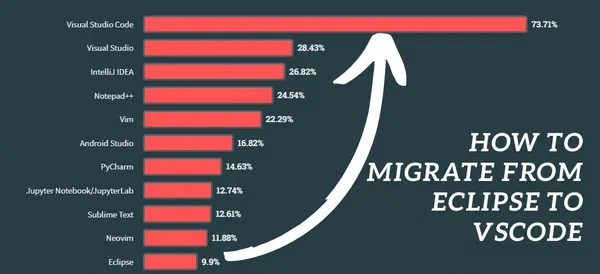
Lessons learned from migrating itemis CREATE, a 280K LOC Eclipse-based application, to the web and Visual Studio Code over two years.
Read Article Andreas Mülder
10 min read
Andreas Mülder
10 min read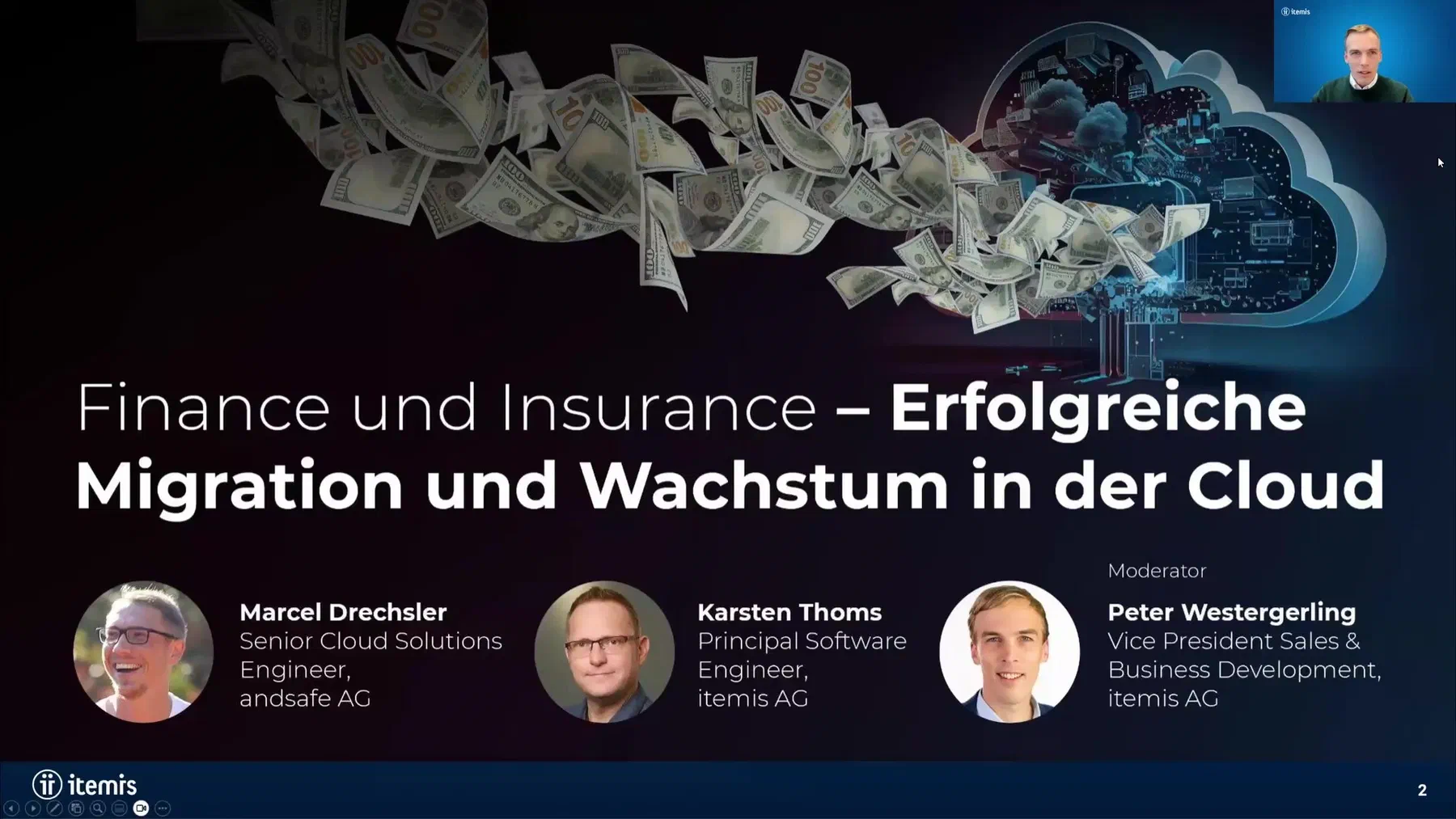
See how andsafe AG leverages the cloud for impressive InsureTech growth and how itemis delivers a methodical approach to migrating legacy systems.
Watch Webinar Karsten Thoms
Learn which strategies finance and insurance companies use to modernize legacy systems and prepare for a digital future.
Watch Webinar Holger Schill
Business logic and technical code in legacy systems mix over the years — with serious consequences. What this means and what you can do about it.
Read Article Arne Deutsch
4 min read
Arne Deutsch
4 min read
When does automated modernization of legacy systems make sense? An analysis of the opportunities, limits, and appropriate transformation tools.
Read Article
Karsten Thoms
7 min read
Thalia modernized its eCommerce platform from a legacy monolith to self-contained systems with itemis.
View Project
DB Fernverkehr AG migrated its Vendo sales platform to a microservice architecture using itemis teams.
View Project
parcIT modernized its banking software with itemis as a long-term partner for web transition.
View Project