





















Model-Based Engineering

Solving Complex Engineering Problems — with Modern, Integrated Methods and Tools

Model-based approaches for systems and software engineering, combined with custom tool development and seamless toolchain integration — pragmatic methods and tailored tool landscapes from a single source.
With itemis CREATE as the workbench for state machines and itemis ANALYZE as a hub for the integration of heterogeneous tool landscapes.

Trusted by
Atruvia avitea Bauerhin BLG BSH DB Denso Draeger ETAS Forvia-Hella Kostal magnotherm MAN ODAS parcIT Pixelboxx Remondis TECE Thalia zurich
Overview

Methods and tool expertise across the entire engineering lifecycle.

Methods and tool expertise is what itemis brings to the table. We help engineering teams optimise their entire development process — from requirements engineering through system analysis and design to software engineering, implementation and test. We close gaps with individually developed tools, ensure seamless integration of heterogeneous tool landscapes and create continuity.

The four topic areas reflect exactly that: Model-Based Systems Engineering, model-driven software development, custom tool development and toolchain integration.

Topics in detail

What you’ll find on each page

01

Model-Based Systems Engineering (MBSE)

MBSE only delivers value when applied pragmatically: as a means to reduce complexity and integration risks in systems development, not as a compliance exercise.

Here you will find out when MBSE concretely saves time and money, when it does not fit, and what the path from methodology selection through tool choice to implementation looks like.

Learn more
02

Model-Driven Software Development

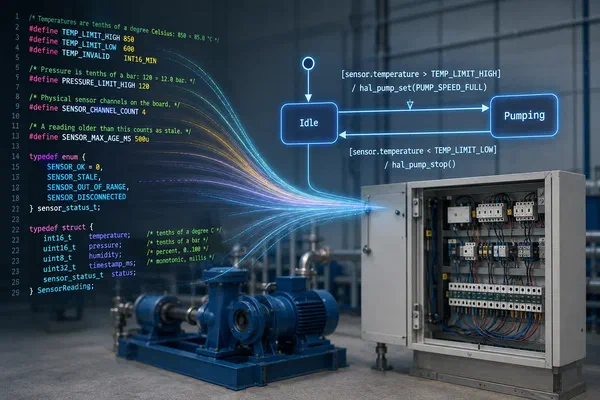
Model-driven development unfolds its value when the model takes on the role of single source of truth: the foundation for reproducible code generation and early error detection, not a documentation format.

Here you will learn how formal models make complexity manageable, how to validate and simulate early and generate code deterministically and whether MDSD is still relevant in the age of AI.

Learn more
03

Custom Tool Development

Every domain has its own language. Where standard tools fall short, we develop custom tools that speak exactly that language.

Here you will learn when a domain-specific tool pays off and when standard tools suffice, how AI changes the economics of tool development and how itemis shapes the path from domain analysis to the delivered tool.

Learn more
04

Toolchain Integration & Tool Selection

Engineering toolchains grow over years and are rarely coherent by design: requirements management, system modelling, test management, implementation. Four tasks, four tool breaks, no end-to-end continuity.

Here you will learn why toolchain integration is critical, what integration levels exist and how itemis approaches tool selection.

Learn more
Our Experts
Dr. Alexander Nyßen

Executive Vice President Digital Engineering · itemis AG

Dr. Alexander Nyßen has specialised in Model-Based Systems Engineering (MBSE), model-based development and the integration of engineering tools since 2003. He supports companies in successfully introducing and sustainably establishing model-based methods and tool landscapes for the development of complex cyber-physical systems. In strategic product management, he is responsible for itemis ANALYZE and itemis SECURE, with a focus on requirements traceability, functional safety and cybersecurity.
Andreas Mülder

Principal Software Engineer · itemis AG

Andreas Mülder is Principal Software Engineer at itemis, responsible as technical project lead for itemis CREATE. Since 2007 he has been developing tools for platforms such as Eclipse, Visual Studio Code, Cloud and Web — with a focus on language engineering, domain-specific languages, simulators and code generators, as well as the integration of generative AI into production-ready tools. He shares his knowledge in blog posts on language engineering and AI-assisted tool development.

A concrete project in mind? Let’s talk!

Schedule a call with Dr. Alexander Nyßen and Andreas Mülder.

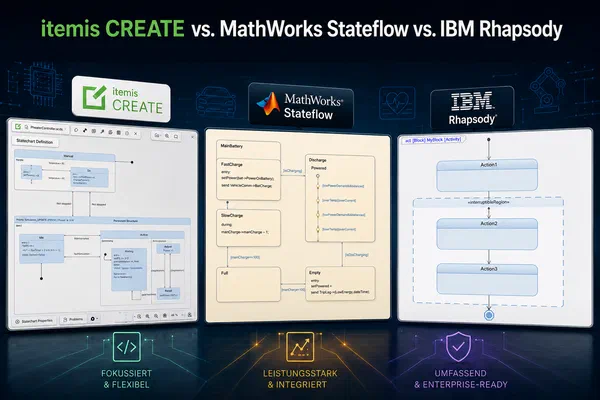
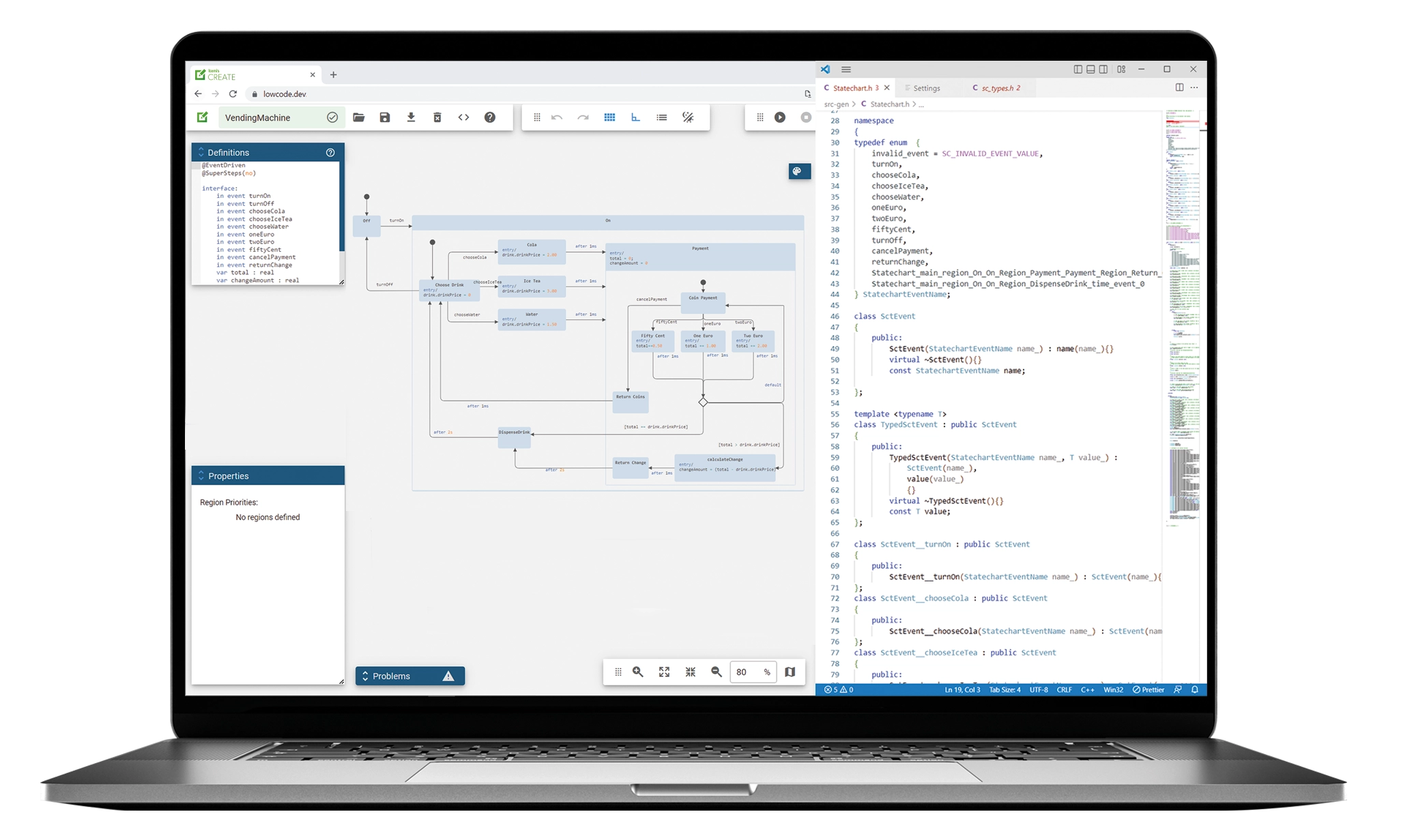
the engineering workbench for state machines

Visual modelling, simulation and code generation in C, C++, Java, Python and more — as an Eclipse workbench, VS Code extension or web-based. In production use — among others — at BSH Hausgeräte, MAN Energy Solutions and Dräger.
Learn more about itemis CREATE
itemis CREATE Screenshot

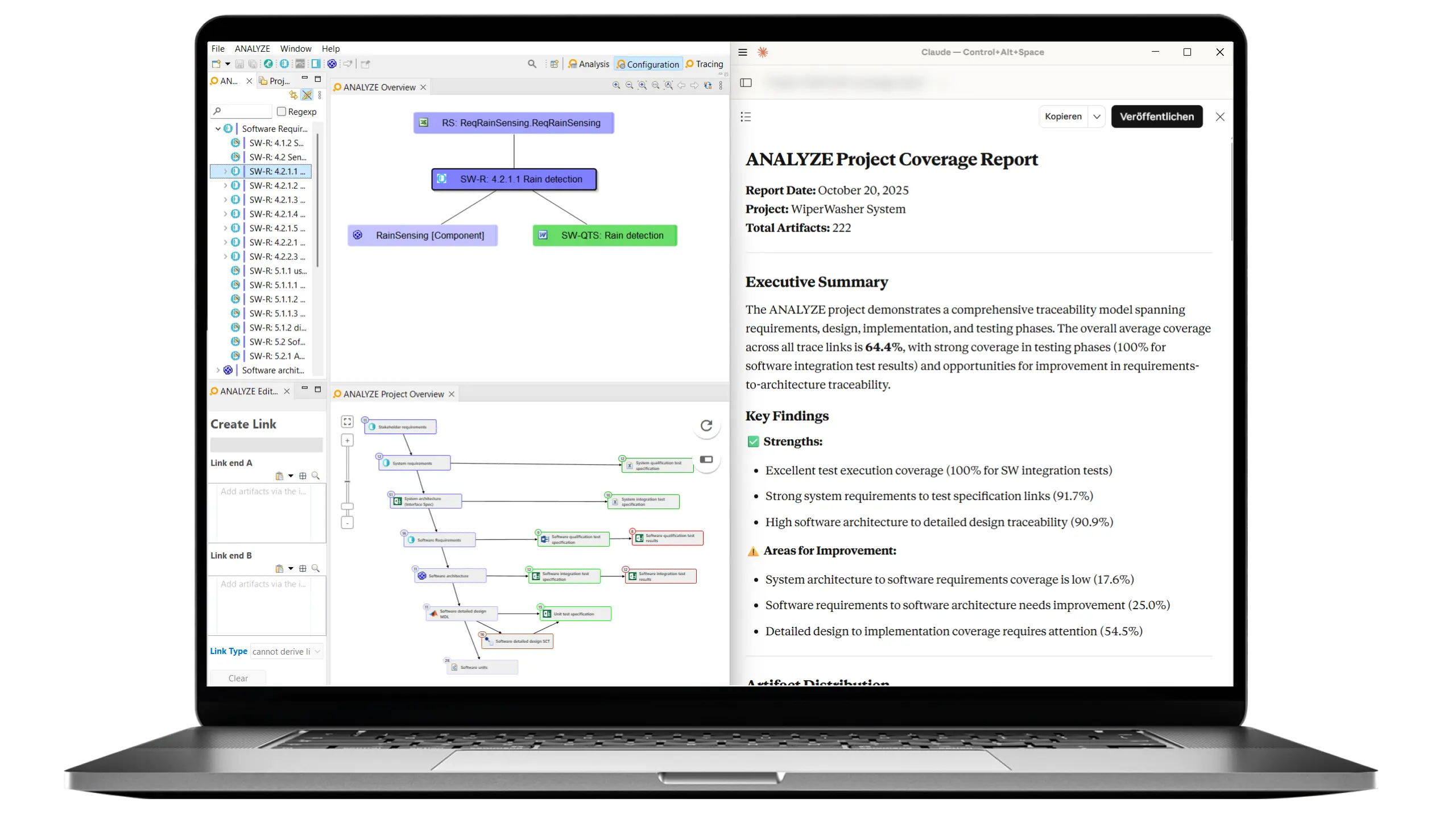
Requirements Traceability for Engineering Toolchains

The vendor-independent traceability platform connects DOORS, Enterprise Architect, Polarion, Jira and more — without touching the source systems. Compliance evidence for ISO 26262, ISO 21434 and ASPICE is generated as a by-product. In production use — among others — at I.G. Bauerhin and FORVIA HELLA.
Learn more about itemis ANALYZE
itemis ANALYZE Screenshot
Four promises

What sets us apart

Clients want more than competitive rates. They want a partner who stays calm under pressure and is honest when something is not feasible.
Proven team, motivated engineers

Proven team, motivated engineers

We staff projects with people who have already worked together — and with engineers who are motivated because we take them seriously as professionals. More than 80% of our engineers have been with itemis for over three years.

Reliable when it counts

Reliable when it counts

Audits, release weeks, crisis sprints — we stay calm, roll up our sleeves and put in the extra hours. Dependability that is not written into the contract.

Direct, honest, no politics

Direct, honest, no politics

No diplomatic rounds, no manoeuvring. We say openly when something is not workable. Problems are solved with a call, not a memo. Sparring partner, not supplier.

Performance over sales pressure

Performance over sales pressure

We don't chase you with sales conversations. Instead, we invest in the relationship — sometimes more than the current budget allows. Those who know us know: when it needs to work, they call itemis.

Expertise

Insights from Model-Based Engineering

AI Agents Meet Projectional Editing: Portalon for MPS
Blog Custom tools

AI Agents Meet Projectional Editing: Portalon for MPS

How the Portalon plugin connects AI coding agents like Claude to the live model of a JetBrains MPS project via MCP — structurally safe edits, validation, and language-engineering skills, on your current MPS version.

Read Article
Dr. Klaus Birken Dr. Klaus Birken 10 min read
Tailoring Enterprise Architect with Add-ins
Blog Toolchain integration

Tailoring Enterprise Architect with Add-ins

How to extend Enterprise Architect with add-ins: model assistants, integrity checks, and installer-based rollout — and which tasks are better handled by external tools like the EA-Bridge.

Read Article
Dr. Patrick Könemann Dr. Patrick Könemann 7 min read
Success stories

Reference projects

Frequently asked questions

FAQ on Model-Based Engineering

Does AI make model-based development obsolete — or do they complement each other?

MDSD and AI are not competitors. AI generates statistical code without conformance guarantees — the same prompt yields different results, without determinism or traceability. MDSD delivers exactly what AI structurally cannot: reproducible generation, auditability and qualifiable tools. In safety-critical development under ISO 26262, DO-178C or IEC 61508, determinism is not an option — it is a prerequisite.

AI is an effective accelerator today for building models: translating requirements texts into initial model drafts, checking models for consistency, suggesting refactorings. The model remains the deterministic source of truth — AI accelerates the path to get there.

When is a domain-specific language worth it — and when is a standard tool the better choice?
A DSL is worthwhile when a manageable group of highly specialised experts works with concepts that no standard tool adequately captures — and when the domain is stable enough to be cast into a language. For broad, heterogeneous user groups with generic requirements, standard products are usually the better choice.
How do MBSE, MDSD, Custom Tools and Toolchain Integration relate to each other?

The four topic areas are interconnected levels of the same problem. MBSE addresses the system level: requirements, architecture and system behaviour in a consistent model. MDSD translates this knowledge into executable, generated code — deterministically and platform-independently. Custom Tools encode domain knowledge directly into the tool: as validated models, enforced rules, consistent generation. Toolchain Integration ensures that all these tools communicate end-to-end and that traceability is maintained across tool and discipline boundaries.

Combining all four levels yields engineering knowledge that is structurally anchored in the system — not in the heads of a few key individuals.

What is the difference between itemis CREATE and a UML tool like Enterprise Architect?
itemis CREATE is specialised for behaviour-oriented modelling with state machines and statecharts — with direct simulation, deterministic code generation in C, C++, Java and Python and production-ready use in regulated projects (ISO 26262, IEC 61508). Enterprise Architect covers a broader spectrum (UML, SysML, architecture modelling) but is not specialised for code generation from statecharts.