Toolchain integration is not an end in itself. It arises from a concrete need: one of the following three triggers.
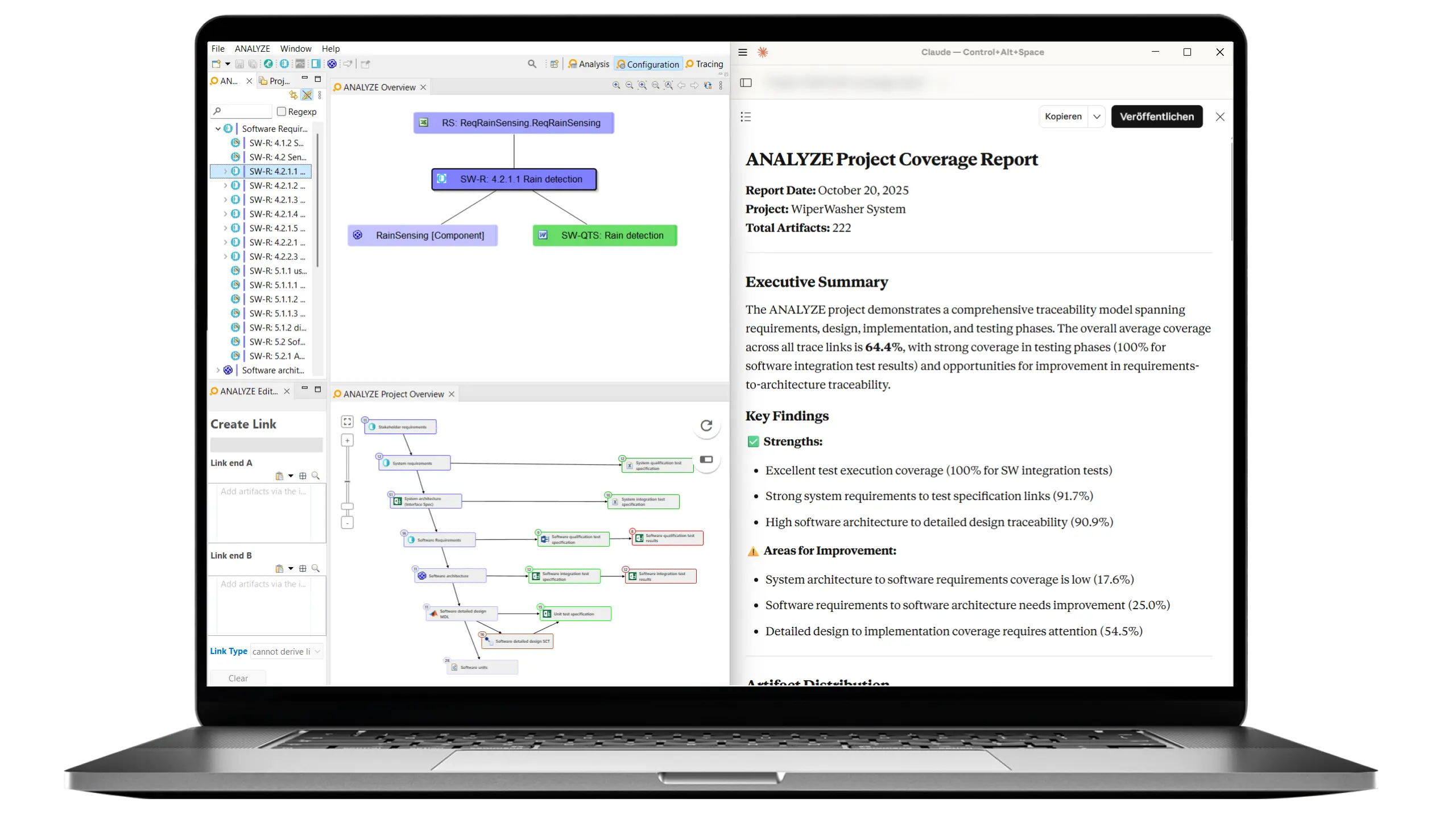
The most common trigger: you need to prove traceability: from stakeholder requirements in DOORS through the system architecture in Enterprise Architect down to the code. ASPICE, ISO 26262 and DO-178C demand end-to-end traceability. No single tool provides this overview by itself.
itemis ANALYZE aggregates data from all tools and creates a continuous, queryable traceability layer, non-invasively, without modifying the artefacts in the source systems. Result: compliance evidence at the push of a button, not on request. → Requirements Traceability
Automation: Code Generation and FMEA from the Architecture
Another strong trigger: you want to derive artefacts automatically from the system model, not transfer them manually.
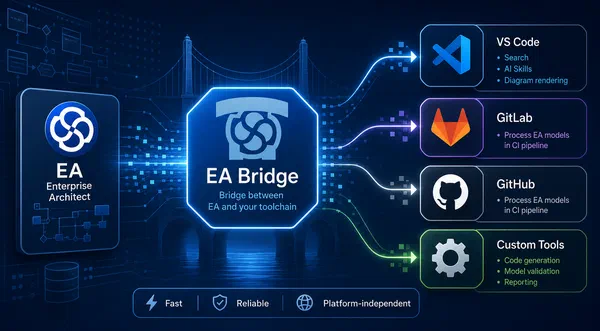
A typical example: Enterprise Architect contains the system architecture model. With the EA-Bridge you connect the model to your code generation pipeline, for instance to implement AUTOSAR methodologies on a UML basis and maintain the underlying toolchain. Another example: the System FMEA is derived directly from the system architecture and automatically transferred into your FMEA tool: consistently, reproducibly and without manual transfer. → Reference: FORVIA HELLA: Automatic FMEA Generation from System Architecture



























 Dr. Patrick Könemann
6 min read
Dr. Patrick Könemann
6 min read